Andrew Luck stood on the sideline in street clothes. He wasn’t playing. A calf injury that had crept down into his ankle had kept him out all summer, one more entry in a medical file that already read like a car wreck. Still, nobody in the building was worried. This was the franchise quarterback, the No. 1 overall pick of the 2012 draft, the man handed the impossible job of following Peyton Manning in Indianapolis who went out and actually did it. Seven months earlier the league had named him Comeback Player of the Year. He was 29 years old. The Colts were a popular Super Bowl pick. Everything was fine.
Then, sometime in the second half, tens of thousands of phones lit up at once.
Adam Schefter of ESPN had just reported that Andrew Luck was retiring. Not after the season. Not at 35 with a farewell tour behind him and a gold jacket waiting. Now. At 29. Luck had planned to announce it himself at a press conference that Sunday, on his own terms, in his own words. The news beat him to his own goodbye. So he stood on the sideline of a meaningless game while the crowd found out, row by row, section by section, that the man in street clothes 50 feet away was done playing football forever.
You can find the video in about four seconds. When Luck walked off the field that night, the boos came down. Not from everybody. From enough. Grown men and women, plenty of them wearing his jersey, booing a 29 year old for deciding he didn’t want to be broken anymore.
Luck kept walking toward the tunnel while the sound followed him. The same building that had spent years chanting his name was sending him off like a traitor, and somewhere in those concrete hallways, between the field and the interview room, he had to decide what kind of goodbye this was going to be.
He didn’t wait for Sunday. In an interview room at Lucas Oil that same night, visibly shaken, Luck gave the press conference early. “For the last four years or so, I’ve been in this cycle of injury, pain, rehab, injury, pain, rehab, and it’s been unceasing, unrelenting, both in season and offseason, and I felt stuck in it,” he told the room. Then he said the part that should be printed on the wall of every locker room in America: “This is not an easy decision. Honestly, it’s the hardest decision of my life. But it is the right decision for me.”
Think about what he was walking away from. Roughly $58 million still sitting on his contract, including a $6 million roster bonus due within the month. Colts owner Jim Irsay later estimated Luck may have left as much as $500 million in future earnings on the table. That is money most of us cannot meaningfully picture, attached to a job that maybe a few dozen humans alive can do at his level, at an age when most careers in most fields are barely getting warm.
He looked at all of it and said no. He said the pain of staying had finally outgrown the fear of leaving.
And they booed him.
Sit with the boos for a minute, because the boos are why this book exists.
Nobody in that stadium hated Andrew Luck. Most of them loved him, or loved what he did on Sundays, which they had long since stopped telling apart. The boos came from a belief so deep that most fans don’t know they hold it: that an athlete is not a person who plays a game but a character who exists to play it, and a character doesn’t get to leave the story early. Luck broke an unwritten contract that night. Not the one worth $58 million. The other one. The one that says the jersey is who you are, and you wear it until somebody takes it off you.
Here’s the thing the booing crowd never had to see up close. By age 29, Andrew Luck had played through a torn labrum in his throwing shoulder, a lacerated kidney, a partially torn abdominal muscle, torn rib cartilage, at least one concussion, and the calf and ankle trouble that wouldn’t heal. He’d spent entire offseasons rehabbing instead of living. At the podium he said it plainly: “I’ve been stuck in this process. I haven’t been able to live the life I want to live.”
Read that sentence again, because of who said it. This is not a guy who got cut in training camp talking. This is the No. 1 pick. The prodigy. The one in a generation. He climbed all the way to the top of the mountain that roughly 8 million American kids stare up at every year, stood on the summit, and told the truth: the identity he’d been handed as a boy had become a cage, and the only way out was to stop being the thing everyone agreed he was.
So here is the question this book is built on. If the man who made it, all the way, past every cut, every draft board, every injury report, felt trapped inside the athlete identity, what happens to everyone else? What happens to the kids the game cuts loose at 17, at 22, at 26, with no press conference, no $58 million already banked, and no plan?
Almost every adult in an athlete’s life asks some version of the same questions. What did you run? What are you benching? Who’s recruiting you? Where’d you commit? How’s the knee? Coaches ask them. Parents ask them. Scouts, teammates, uncles at Thanksgiving. An athlete can go from age eight to age 28 answering questions every single day and never once hear the only one that is guaranteed to matter:
Who are you when the game is gone?
Nobody asks it. Asking it feels like bad luck, like planning the funeral of somebody who’s still healthy. Coaches don’t ask because they need you hungry. Parents don’t ask because they’ve got their own hopes riding on you, and because asking feels like doubting. You don’t ask because you’re 17 and the game is going great and the end is a thing that happens to other people.
There’s another reason, and it’s uglier. Inside a locker room, the question sounds like weakness. Bring up life after the game and somebody will say you’ve got one foot out the door, that you’re not all in. It’s a lie, and this book will spend a lot of pages proving it’s a lie, but it’s a powerful one, and it keeps the question unasked in the one place where everybody is quietly wondering about it. A room full of grown men, every one of them a single bad MRI away from the end, and the subject gets treated like a curse word.
This book asks it. Over and over, at every level, until the question stops being scary and starts being useful.
Let me show you the mountain Luck stood on top of, because the size of it is the point.
In the most recent national count, more than 8.2 million kids played high school sports in the United States. That’s the National Federation of State High School Associations’ own survey, and it was an all time record. Eight million plus teenagers putting on a school jersey, most of them carrying some version of the same quiet hope. The funnel narrows fast from there, and it narrows without mercy. Run the NCAA’s own probability numbers on football, the biggest sport in the country, and you find that roughly 1 in 1,000 high school players will ever be drafted by an NFL team. Drafted. Not starting, not starring, not retiring on their own terms. Drafted, which is an invitation to a tryout. Making a roster and keeping it is rarer still.
We’ll walk through the full math later in this book, sport by sport, level by level, and I promise you the numbers get no friendlier. But I want to be straight with you about something before we go any further, because you’ve heard grownups quote odds at you before and you’ve learned to tune it out.
This is not that book.
I’m not here to tell you the dream is stupid. I’m here to tell you something the odds quoters always miss: the dream ends for the winners too. The funnel isn’t only cruel to the kids it cuts. It’s cruel to the ones it keeps, because the longer you survive inside it, the more of yourself you pour into the single identity it rewards, and the less of you is left standing anywhere else. Andrew Luck didn’t get cut. He got everything. And at 29 he had to claw his way out of his own life in front of a booing crowd.
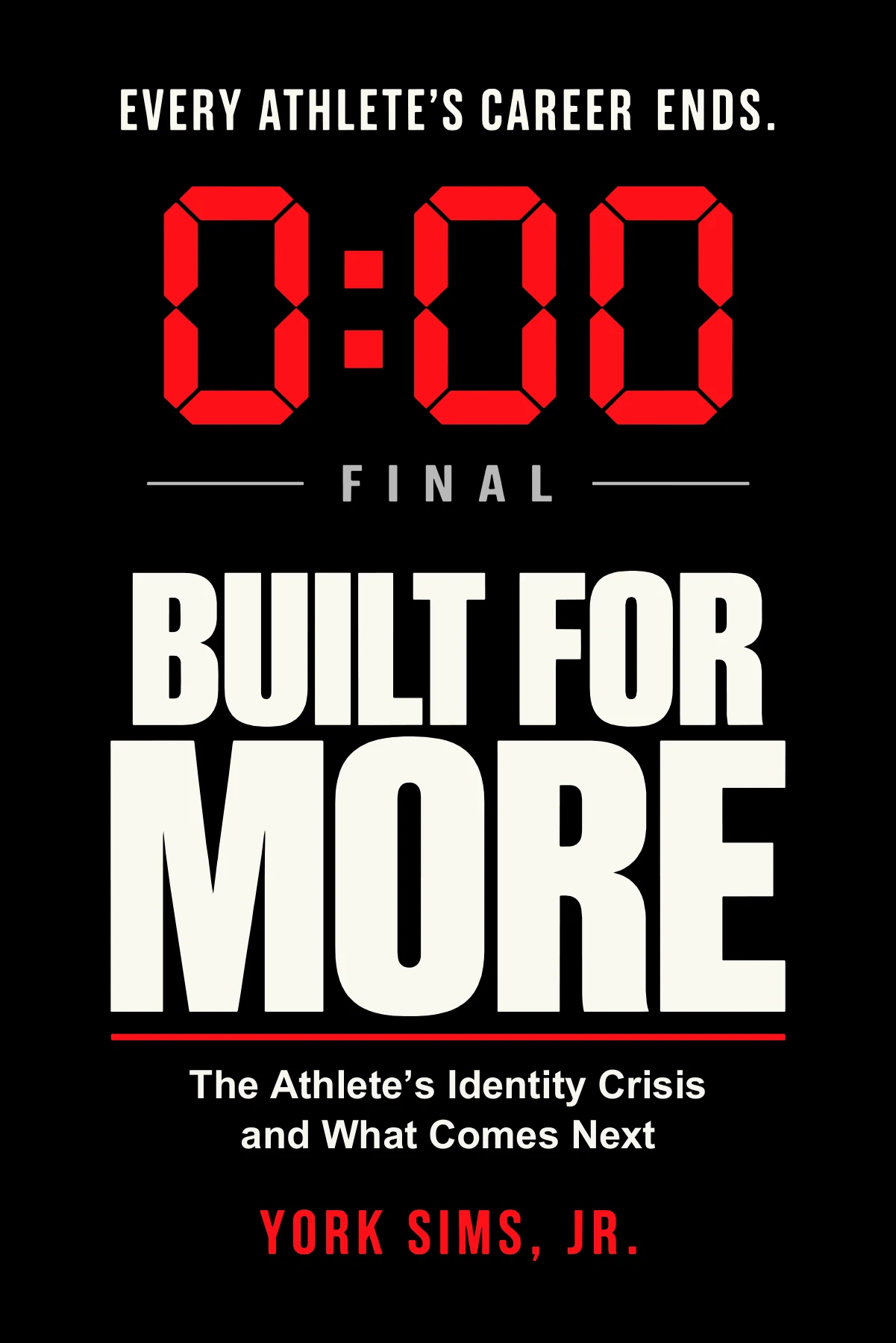
Every athletic career ends. All of them. One hundred percent. The kid who gets cut from JV freshman year and the Hall of Famer with a statue outside the stadium have exactly one thing in common, and it’s the thing nobody talks about: there was a last day. There is always a last day. The only variables are when it comes, whether you see it coming, and who you are when it arrives.
There’s one more thing the research on athletes in transition keeps finding, and it hangs over every story in this book. The endings that do the most damage are the ones athletes don’t choose. Decades of studies agree on this: the player who walks away on his own terms tends to land, sooner or later. The player the game walks away from, through a torn ligament, a coach’s decision, a draft night that never calls his name, is the one who spirals. Now hold that up against Andrew Luck. He got the rarest ending in sports, the chosen kind, planned in advance, announced with a microphone in his hand and generational money in the bank. And he still called it the hardest decision of his life. Most athletes get the other kind of ending, with none of the cushions.
I’m not writing this from a press box. I lived inside this funnel, and I know from the inside what it does to how a kid answers the question “who are you?”
My dad couldn’t afford a real hoop, so when I was about four years old he knocked the bottom out of a milk crate, nailed it to a sheet of plywood, and hung it on the back of our house in Clarksville, Arkansas. The first time I threw a ball up at that crate and heard it drop through, something in me locked into place. I remember the thought, clear as anything: this is what I’m supposed to do. This is who I’m supposed to be. I was four. I had picked my whole identity before I could spell it.
By seventh grade the town agreed with me. I took the first handoff of my first organized football game 80 yards for a touchdown, and I heard my name come booming back over the stadium intercom: “Touchdown by York Sims.” I can still feel what that did to me. It was like the universe had been mumbling my whole life and, right then, for the first time, it shouted. From that day on I wasn’t the kid from the house on Taylor Street where the lights got cut off. I was York Sims, the athlete. That was the trade, and I made it gladly, the way every kid in this book makes it. Nobody tells you you’re trading anything at all.
That swap is the subject of this whole book. It happens early, it happens with everyone smiling, and it happens because the athlete identity works. It gets you praise, structure, friends, status, a table to sit at, a thing to be. Psychologists have a name for what comes next, and we’ll get into the research properly in the chapters ahead. For now, all you need is the plain version: the more completely “athlete” becomes your entire answer to “who are you,” the better it feels while you’re playing, and the harder you fall the day you’re not.
Nobody warned me either.
I always figured my ending would be a scene. A final buzzer, a walk off the floor with the crowd on its feet, something you could point to. That is not how it went. Mine came apart slowly, in a training room, one knee surgery and then a second one eight months later, at a school in California where I was the oldest guy in the gym still chasing it. There was no last shot. There was a stretch of games where my body kept telling me to sit down and my pride kept overruling it, until one day the pride just went quiet. After college came a brief stint in Turkey. I didn’t get the second contract I wanted, and just like that, it was over. Somewhere on the flight home I finally admitted the thing I’d been outrunning since I was four. Me and the game were done.
Nobody threw a ceremony for that. There was no press conference, no goodbye. I didn’t even tell anybody, because how do you announce that the only thing you ever were is over? I just stopped, and the whole world I’d built my self inside of stopped with me, and for a long time after that I did not have a word for who I was.
A word about who I think you are, holding this book.
Maybe you’re the athlete. Sixteen, 17 years old, good enough that people talk about you, hungry enough that you skipped to this paragraph looking for the part where I doubt you so you can prove me wrong. I’m not going to doubt you. I’ve got no idea how good you are. You might be the 1 in 1,000. Somebody is. What I know for certain is this: whether your last game happens next November or 15 years from now on national television, it’s coming, and the version of you who walks out of that final locker room will either have somewhere to go or he won’t. This book is about making sure he does. That’s it. That’s the whole agenda.
Or maybe you’re the parent. You’re the one driving to tournaments at 6 a.m., paying for the trainer, watching your kid’s face when a coach calls his name. Somewhere in the back of your mind lives a worry you’ve never said out loud, because saying it feels like betraying him. The worry goes: what happens to my kid if this doesn’t work? I wrote this book partly so you don’t have to be the one to start that conversation cold. Hand it over. Let me be the bad guy for a few chapters. I can take it, and the numbers back me up.
Coaches, you’re in this too, and you carry more of it than anybody admits. You’ve got kids on your roster right now whose last game is closer than they think, and you probably know which ones. Nothing in your job description covers what to say to them. The best coaches treat preparing a kid for life after the game as part of coaching him in it, and their former players still call them 20 years later. The ones who only ever coached the jersey get remembered differently. And if you’re worried this book will soften your locker room, it won’t. A player who knows who he is doesn’t play scared.
Either way, here’s the deal I’m offering, and I want it on the table this early so there’s no confusion about what kind of book you’re in.
I will not lie to you about the odds, and I will not use the odds to tell you to quit. Those sound like the same thing but they’re opposites. The people who quote statistics at young athletes usually want the dream to shrink. I want the dreamer to grow. Chasing the game with everything you’ve got and building a self that survives the game are not enemies. They never were. The research on athletes in transition backs this up and so does every rebuilt life in these pages: the ones who land on their feet are almost never the ones who loved the game less. They’re the ones who started building the second identity before the first one expired.
So we’re going to walk the whole funnel together, honestly, level by level. The first jersey and what it starts. The machine that youth sports has become. The high school years, where the overwhelming majority of athletic careers quietly end. College, where the survivors start over at the bottom. The pros, where the air gets thin and the jobs number in the hundreds, and the average career is over before 30. Then the void on the other side, the one that swallowed men who had won everything there was to win. And finally the playbook: what the people who came out whole did differently, and how to start doing it now, this season, without giving up an inch of the dream.
Along the way you’ll meet real people, with real names, whose stories are documented and who lived every level of this thing. Some of their endings are hard. I let them be hard, because you’ve been sold enough highlight reels.
And Andrew Luck? The man they booed off the field?
In November 2024, Stanford announced him as the general manager of its football program. The quarterback who couldn’t live inside the jersey anymore found a way to take everything the game had built in him, the mind, the leadership, the two decades of hard won knowledge, and pour it into a new self that doesn’t tear ligaments. It took him years, and he had resources you don’t have. But the shape of what he did is available to anyone, and it’s teachable, and teaching it is what the last part of this book is for.
It took me years to find the shape of it for myself, and I found it the ugly way, through the wrong turns first. I lost twenty five thousand dollars promoting a concert that fell apart. I got scammed out of thirty thousand more on an investment that never existed. I was trying to fill the practice shaped hole with anything loud enough to drown it out, and none of it held.
What finally held started small and quiet, with a plant. I was working retail with an ulcer eating a hole in my stomach from stress, and growing became the first thing since basketball that was completely mine. I built a farm out of raw dirt with my own hands, and somewhere in there I realized the dirt was my gym now, the plants were my teammates, and the harvest was my championship. I had all the same muscles the game gave me. They just needed a new place to point.
Here’s the one thing I wish somebody had told me at 17, when I was sure basketball was the only thing I would ever be. Your past is not a prediction. It’s a preparation. Nothing you are pouring into the game right now is wasted, even on the day the game gives you nothing back. The discipline transfers. The obsession transfers. You transfer. You just have to be willing to aim all of it at something new when the time comes.
The Point
Every athletic career ends. Yours will too. That is the only statistic in this book with no exceptions, no caveats, and no survivors. The freshman who gets cut, the senior who never gets the call, the pro whose phone goes quiet, and the legend who leaves on top all arrive at the same door. The tragedy is not that the door exists. The tragedy is arriving at it with nothing on the other side, because you spent 15 years becoming exactly one thing and nobody ever asked you the question.
So I’m asking. Who are you when the game is gone?
You don’t need the answer today. At 17, you’re not supposed to have it. What you need today is to take the question seriously, because everything in your world, every coach, every trophy, every retweet, is quietly teaching you not to. This book is the counterweight. Read it while you still love the game, because that’s exactly when the work should start. Building who you are outside the sport is not a betrayal of the dream. It’s the thing that lets you chase the dream all the way to its edge without falling off.
The game will decide when it’s done with you. It always does. Who you are after that gets decided long before, and it’s the one contest where you control everything.
Build for more. Start now.